
"aroma development"
20000 article(s) found
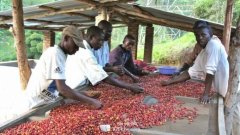
Yemen, a coffee-producing region in Asia
Mocha Mattari early Yemeni coffee was mainly exported from the port of Mocha, so the coffee that was later exported from here was named after Mocha. In Yemeni coffee, Mattari and Sanani are more famous, among which Matari tastes more full-bodied, with strong acidity and cocoa flavor, while Sanani has more

The development history of mocha coffee
[English name]: mocha [English name]: Mocha [material]: 30ml Italian concentrate, right amount of chocolate sauce, right amount of fresh cream, right amount of milk [preparation]: pour espresso and milk into a cup full of 7 minutes, squeeze cream and sprinkle with chocolate sauce. [details]: guests are free to choose the cup they like and add 2 tablespoons of sugar to dissolve in

A brief introduction to the Origin and Development of Fine Coffee beans in the peaceful and full-bodied Arusha Coffee Manor
After moderate or more moderate baking, it has a strong aroma, then grind it into a fine powder, soak it in a pot of boiling water, and invite friends to sit around and taste it. The famous coffee brands in Tanzania, such as Africafe, Tanica Cafe, Kilimanjaro and so on, are of much better quality than the Nestle coffee we often drink. Coffee from Tanzania has long been popular with Europeans.

Introduction to the taste description of boutique coffee bean manor in Bolivian coffee producing area
In the past, most of the coffee in Bolivia was of mediocre quality, but in recent years, the production of boutique coffee has developed rapidly, and there have been a lot of pretty good beans. In recent years, the COE (Cup of excellence) system, which was first implemented in Brazil, has become more and more popular. Bolivia has also introduced this system, which can stimulate the enthusiasm of coffee farmers on the one hand and improve it on the other.
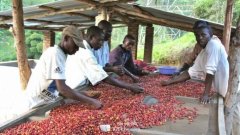
World boutique coffee producing area Asian coffee producing region Yemen
Mocha Mattari early Yemeni coffee was mainly exported from the port of Mocha, so the coffee that was later exported from here was named after Mocha. In Yemeni coffee, Mattari and Sanani are more famous, among which Matari tastes more full-bodied, with strong acidity and cocoa flavor, while Sanani has more

Evaluation | comparison of flavor characteristics of 3 Kenyan coffees | how to make Kenyan coffee by hand?
Professional coffee knowledge exchange more coffee bean information please pay attention to the coffee workshop (Wechat official account cafe_style) African coffee producing characteristics, and mostly for its charming sour, aroma world-famous, of course, Kenya is not absent. Kenya is a tropical region, with two rainy seasons a year and two harvests, with 60% concentrated from October to December and 40% from June to August. Main kinds of coffee

Coffee professional relay race between the two sides of the strait starts to promote cross-strait relations
From left to right, Changlin Xinyun is the executive of Changlin Coffee, Yuen Coffee of Werewolf Coffee, Taiwan Taiyuan Museum, Wang Liang of Shenzhen Shanyi Coffee, Li Mingyan, head of the Development Bureau of Taichung City Government, and Zhu Keming, head of the Development Bureau of Taichung City. The "PRO AROMA Coffee Relay", initiated by coffee workers in the three places, recently worked slowly in Taichung.

A brief introduction to the Origin, Development, History and Culture of Fine Coffee beans in Arida Manor with rich aroma
This bean is fully washed and processed, the appearance is fresh emerald green, the bean is full and shiny, it looks like a high-density hard bean. Baked to an obvious degree of high fruit aroma shows, the entrance is also juice-like sweet and sour, bright and refreshing. Baking a little deeper, the sweetness of vanilla and nectar in the dried fragrance are mixed together, and the baking degree and acidity of high+ are decreased.

A brief introduction to the Origin, Development, History and Culture of Cupid Fine Coffee beans with strong Flower aroma
The high coffee price in Panama is mainly caused by the following factors: land price: for the people of North America, they are eager to buy a stable and beautiful land at a low price. Panama is such a place; Panama grows more farmers' export coffee in the name of manors to emphasize that its manor Gesha is one of the most primitive coffee varieties in the world.

A brief introduction to the Origin, Development, History and Culture of Esmeralda Fine Coffee beans treated by Bai Mi
Panamanian Rose Summer: a rare wild variety, the champion and regular guest of various tasting competitions in the world. The appearance of raw beans is slender, ripe beans have unexpected citrus aromas, and the aftertaste is full of flowers and sweet fruit. Absolutely unique boutique coffee. Rosa originated from a very rare wild species in Ethiopia, and the name of the bean may have been found near a small local village called Rosa.

A brief introduction to the Origin, Development, History and Culture of Fine Coffee beans in Lazmus Manor with strong aroma
The suitable climate in Colombia provides a real natural pasture for coffee. Coffee trees in Colombia are mainly cultivated in the Andes, on steep slopes about 1300 meters above sea level, where the annual temperature is about 18 degrees Celsius, annual rainfall is 2000 to 3000 millimeters, latitude 1-11 15 north, longitude 72-78 west, and the specific range of elevation can exceed 2.000 meters. By

A brief introduction to the History and Culture of the Origin and Development of the aromatic Coffee Manor in Arusha, Tanzania
It is said that the earliest Arabica coffee in Tanzania was introduced by Christians from Kenya and is similar to Kenya in flavor characteristics. With grapefruit aromas and soft and bright acidity. However, because the economic conditions of Tanzania are worse than those of Kenya, the production conditions are poor. Tanzania's quality control is not strict enough, which destroys the coffee in many processing links.

The origin and development history of Asasa fine coffee beans in Jiedipu region
Sunlight and sherry: Sunlight is a little complicated, light fermentation aroma, burnt bitterness will be heavier, taste will be much richer, honey sweet, cocoa with a little spice, body thick and lasting aftertaste washed and sherry: washed acidity will be brighter, just like citric acid, taste more fragrant, citrus fragrance is more obvious, the latter part of some black tea taste Ye Jia Sherry means let us in this piece

Introduction to coffee bean producing countries Introduction and development history of Colombia coffee
Colombia coffee Colombia coffee, Arabica coffee is quite representative of a good variety, is a traditional deep roast coffee, with a strong and memorable taste. Its aroma is rich and thick, with a clear, high-quality acidity, high balance, sometimes nutty, lingering, both in appearance and quality, Colombia coffee are comparable

A brief introduction to the origin, development, history and culture of fresh and elegant Santo Domingo boutique coffee beans
In the early 18th century, coffee was introduced to Domiga from Martinique, and fine coffee was produced in the north represented by Hibao and in the south, including Okayabani Santo Domingo. Among them, the coffee produced by Santo Domingo and Barney, which is almost synonymous with domiga coffee, is a world-famous high-quality coffee. Santo Domingo coffee, which is characterized by freshness and elegance,

The characteristics of the story of the origin of coffee bean industry in Rwanda
For the exchange of professional baristas, please follow the coffee workshop (Wechat official account cafe_style) Today, when we mention Rwanda, more people immediately think of the 1994 Hutu genocide against the Tutsis in Rwanda (The Rwandan Genocide). In fact, the modern history of Rwanda and the development of coffee industry are inseparable.

The Development History of Coffee in China-- an introduction to the Cultural process
The Development History of Coffee in China-- introduction to the Cultural process with the popularity of coffee, a drink with a long history, coffee is being accepted by more and more Chinese people. Some data show that China's coffee consumption is increasing year by year, and is expected to become an important coffee consumer in the world. Today, Yunnan coffee produced in China's own land, with its noble quality, low-cost

A brief introduction to the Origin, Development, History and Culture of Rose Summer Fine Coffee beans with Honey Cream Flavor
This is a coffee that can be praised by a large number of adjectives, and the sweetness of this coffee is testing the brightness of this coffee, especially in the case of shallow roasting. Rosa coffee raw beans have a very beautiful turquoise, jade-like warm texture, smell of fresh grass, peach, berry and oolong tea that most coffee beans do not have.

A brief introduction to the Origin, Development, History and Culture of Rose Summer Fine Coffee beans with strong sweetness
Geisha, which is grown in many parts of the world, is the new king of boutique coffee, among which Panama, Guatemala, Colombia and other Latin American countries have relatively high quality, and the price of rose summer coffee raw beans has a very beautiful blue-green, jade-like warm texture, smell of fresh grass, peach, berry and oolong tea that most coffee beans do not have.

A brief introduction to the History and Culture of the Origin and Development of Rwanda Fine Coffee beans with long-lasting aroma
Most of the coffee in Rwanda is washed. The water washing method will first wash and flotation the ripe coffee fruit, then remove the exocarp, pulp and part of the pectin layer, then send the coffee into the fermentation tank, remove the remaining pectin layer and then send it to the drying ground for drying treatment, so that the water content reaches about 13%. The coffee in the picture above is placed in an African shed to dry.